
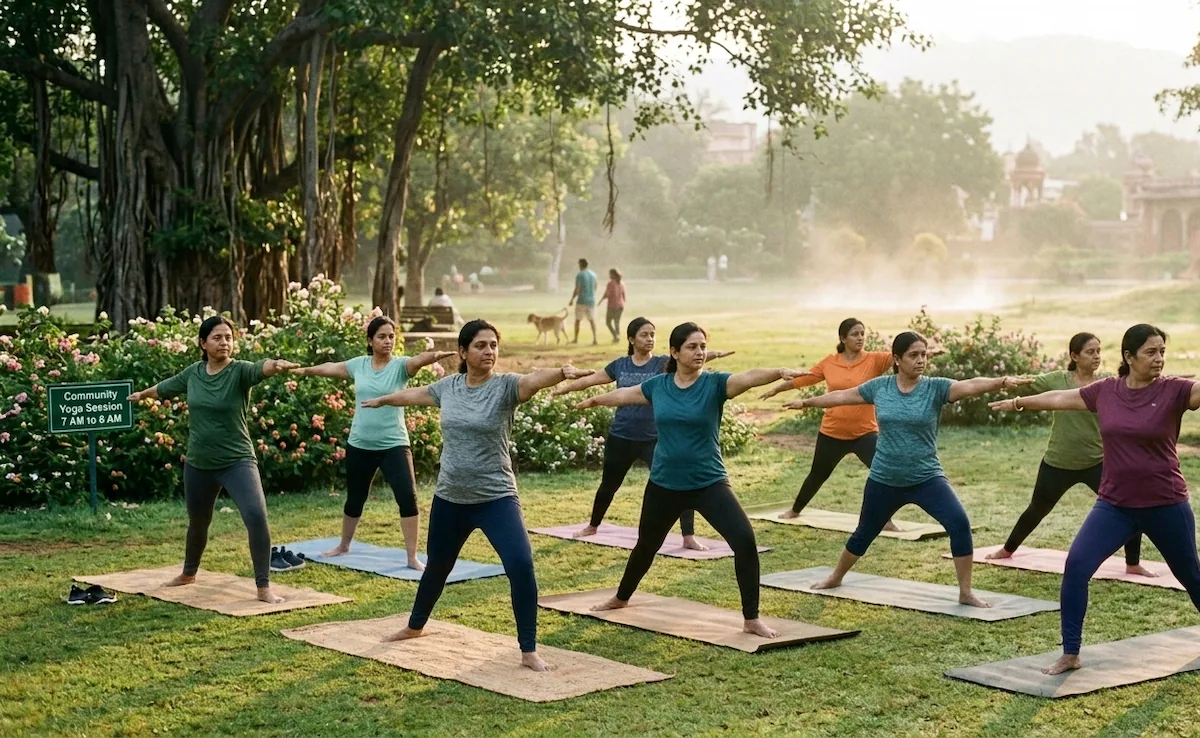
Something meaningful has been happening in Singapore’s suburban neighbourhoods over the past several years. The concentration of wellness businesses, and yoga studios in particular, has shifted from the central commercial districts outward into the heartlands, the HDB towns, the neighbourhood commercial centres and the suburban residential precincts that house the majority of Singapore’s population. This geographic diffusion of quality yoga access represents more than a business trend. It is a public health development with real implications for how Singapore’s population manages the chronic disease burden that drives a disproportionate share of the healthcare system’s cost and complexity. Finding a yoga studio near me is no longer a challenge limited to residents of affluent central districts. It is increasingly a realistic possibility for a much broader cross-section of Singapore’s population.
The Historical Geography of Singapore’s Wellness Industry
For most of its modern history, Singapore’s premium wellness industry was concentrated in a small number of central precincts: Orchard Road, the CBD fringe, Holland Village and a handful of other locations associated with the expatriate community and upper-middle-class local professionals. This geographic concentration meant that quality yoga access was effectively rationed by proximity to these precincts, which in practice meant rationed by income and residential location.
The residents of Tampines, Woodlands, Jurong West, Bedok and the dozens of other suburban towns that house the majority of Singapore’s population had limited access to quality yoga studios without a significant transit commitment. This was not simply an inconvenience. It was a structural barrier to wellness participation that had predictable effects on the health behaviour patterns of large segments of the population.
The economics that supported this concentration were straightforward: premium wellness businesses needed premium rents to be commercially viable, and premium rents were concentrated in central locations. The assumption was that the target market for yoga, which skewed toward higher-income professionals, was also concentrated in central locations.
What Changed: The Democratisation of Yoga Access
Several forces have combined over the past decade to disrupt this geography. The growth of Singapore’s health-conscious middle class, the mainstreaming of yoga from a niche wellness practice to a broadly recognised health activity, and the entrepreneurial development of neighbourhood wellness businesses have all contributed to a progressive diffusion of yoga access across the island’s suburban geography.
Simultaneously, the development of neighbourhood commercial hubs around major MRT stations in suburban towns has created commercial real estate options that were not previously available to wellness businesses. Upper-floor spaces in suburban malls, shophouse conversions along neighbourhood high streets and purpose-built community wellness spaces within new HDB developments have all provided viable locations for studios that would previously have found the suburban geography commercially impractical.
The result is a substantially changed landscape of yoga access across Singapore. Quality studios now operate in Tampines, Bishan, Jurong, Toa Payoh, Clementi and dozens of other suburban locations that would have been implausible yoga studio sites ten years ago. And the health behaviour data is beginning to reflect this change.
Population Health Implications of Expanded Neighbourhood Access
The public health literature on the relationship between access to physical activity facilities and population health outcomes is extensive and consistent. Communities with greater access to quality exercise facilities within walkable or short-transit distance show better outcomes on multiple health indicators, including lower rates of obesity, hypertension and type 2 diabetes, higher rates of exercise adherence, and better mental health scores on population surveys.
These relationships hold even after controlling for socioeconomic variables, which is important because it means the effect of facility access is not simply a proxy for income. Providing access to quality wellness facilities in lower and middle-income residential areas produces health behaviour changes and health outcome improvements that are independent of changes in income or education.
For Singapore, where the government has made the management of chronic disease burden a national health priority, the expansion of yoga access to suburban populations represents a meaningful contribution to public health goals. The mechanisms are the same as those established in the research literature: reduced cortisol and improved stress management, better cardiovascular risk marker profiles, improved musculoskeletal health and functional capacity, and the mental health benefits of regular physical practice and community engagement.
The Role of HDB Commercial Infrastructure in Supporting Neighbourhood Studios
Singapore’s unique public housing model, which houses approximately 80 percent of the resident population in HDB estates, has an underappreciated role in the hyperlocal wellness expansion. HDB estates are planned with neighbourhood commercial centres, and the progressive upgrading of these centres has created commercial spaces that are accessible to wellness businesses at rental rates that make suburban studio operations economically viable.
The proximity advantage of an HDB commercial centre studio for the surrounding residential population is exceptional. For the resident of a nearby HDB block, a studio in the neighbourhood centre may be a five-minute walk from their front door. This proximity level represents almost frictionless access by the standards of exercise adherence research, and the attendance consistency it generates is correspondingly high.
Studios that have established themselves in HDB commercial centres report member demographics that are meaningfully different from central city studios: more multigenerational, with a higher representation of older practitioners, and with higher proportions of practitioners who were not previously regular exercisers before discovering the nearby studio. This last group is the most significant from a public health perspective. The marginal health gain from providing a yoga studio to someone who was already exercising regularly at a gym is modest. The marginal health gain from providing accessible yoga to a previously sedentary middle-aged Singaporean is substantial.
Community Building as a Health Amplifier
One dimension of the neighbourhood yoga studio’s health impact that aggregate data does not capture is the community effect. A studio embedded in a residential neighbourhood, where practitioners see each other at the hawker centre, the wet market and the park as well as in the studio, develops social bonds among its members that have independent health benefits beyond the practice itself.
The research on social connection and health outcomes is among the most robust in epidemiology. Social isolation is associated with elevated inflammatory markers, impaired immune function and dramatically increased risk of cardiovascular events and premature mortality. The social networks that neighbourhood yoga studios generate are genuine health interventions, not merely pleasant side effects of the practice.
Yoga Edition represents the type of studio community that takes its role as a neighbourhood wellness anchor seriously, understanding that the contribution it makes to population health extends beyond the individual session and into the broader social fabric of the community it serves.
